 Santa Marta Travel
Updated: 15 Nov 2026 · By Santa Marta Travel (RNT 71239)
Yes, Santa Marta can be visited with peace of mind if you take normal big-city precautions. As of November 2026, none of the UK, Canada or the United States list Santa Marta or Magdalena department among the areas to avoid: the UK updated its advice on 30 October 2026 with no restrictions for the department, Canada asks travelers to "exercise a high degree of caution" across Colombia, and the US keeps the country at Level 3. The main risks are street theft, unlicensed taxis and occasional roadblocks on the Troncal del Caribe highway.
This guide summarizes what official advisories say, what happened in 2026 and the practical advice we give our own travelers.
What official travel advisories say (Nov 2026)
| Government | Colombia overall | Santa Marta / Magdalena |
|---|---|---|
| United Kingdom (FCDO) | No single level; lists areas to avoid except for essential travel | Not listed. On 6 October 2026 it removed its information on heightened security measures in Santa Marta |
| Canada | "Exercise a high degree of caution" due to high crime (updated 2 Nov 2026) | Not among the regions to avoid |
| United States | Level 3, "Reconsider travel" | Not on the Level 4 list |
Advisories change; check them before you travel, especially if your travel insurance depends on them.
What happened in 2026
- February: Parques Nacionales temporarily closed Tayrona Park because of public-order risks (Resolution 091). It reopened on 5 March with police and mounted police present (Resolution 112).
- September: an armed strike affected the city and the road to Tayrona late in the month; the government announced it had been lifted on 27 September and reinforced security forces.
- November: Tayrona reopened on 3 November after its scheduled closure, and Caracol Radio reported normal visitor flows at El Zaino, Palangana and Bahía Concha.
The takeaway: on most days tourism runs normally, but it pays to stay flexible and to work with a local operator who will tell you if something changes.
Most common risks and how to avoid them
Petty theft and robbery
The UK warns about pickpocketing, mugging and robbery in major cities and on the Caribbean coast. On the beach, never leave belongings unattended, carry only the cash you need for the day, avoid showing your phone on the street at night and leave your passport at the hotel (carry a copy, and the original if you visit a national park, where it is required for your fee category).
Taxis
Use taxis from official ranks, booked by phone or through your hotel. Do not hail taxis on the street at night or accept offers at the airport. Fixed fares are set by Decree 235 of 2026: for example, COP 40,136 from downtown to the airport. More in our guide on getting around Santa Marta.
Roads at night
The US and UK advise against road travel outside cities at night. Canada notes that the Troncal del Caribe (Route 90), the road to Tayrona, can be closed by roadblocks with little warning; you can call #767, the Highway Police line, to check road conditions (Spanish only).
Boat trips
Canada mentions boating accidents in Santa Marta. Choose formal operators, with life jackets for everyone, no overloading and respect for sea conditions. When a beach flies the red flag, do not swim.
Sun, sea and weather
Heat and dehydration are the most frequent problems travelers face. Drink water, wear sunscreen and avoid walking at midday. The Colombian government has declared an El Niño event that could last until March 2027, with heavy rain or drought depending on the area; check Santa Marta's weather and local news.
Tourist areas: what to expect
- Historic center and Camellón promenade: busy by day and until late at night around the restaurant area. Stick to well-lit, busy streets. See our historic center guide.
- El Rodadero: a lively, family-oriented resort area; watch your belongings on the beach.
- Taganga: a fishing village with a backpacker vibe; return by taxi at night.
- Tayrona Park and the Sierra Nevada: visit by day with registered operators and stay on marked trails.
How to choose a reliable tour operator
- Check that it has an active National Tourism Registry (RNT) number on Confecámaras' official site.
- Ask for a written list of what is included: transport, insurance, tickets and times.
- Be wary of prices far below market offered on the street.
- Prefer traceable payments and receipts.
Santa Marta Travel operates under RNT 71239. Plans such as the Cabo San Juan tour or the city tour include insurance and transport from your accommodation; each tour page details what is included.
Useful numbers
- Emergency line: 123 (police, fire and ambulance).
- Road conditions: #767 from a mobile phone.
- Tayrona Park: tayrona@parquesnacionales.gov.co.
- Santa Marta Travel: WhatsApp +57 311 726 6542.
Related tours
- Santa Marta city tour with guide and transport
- Playa Cristal overland tour, with pickup
- Tayrona Park catamaran tour
- Aquarium and Playa Blanca with lunch
Santa Marta safety FAQ
Is Santa Marta safe for tourists in 2026?
Yes, with normal precautions. As of November 2026, no official UK, Canadian or US advisory asks travelers to avoid Santa Marta or Magdalena.
Is it safe to visit Tayrona Park?
Yes. The park reopened on 3 November 2026 and is operating normally. It can close because of weather or public order, so check its status before you go.
Can I use Uber in Santa Marta?
Decree 235 of 2026 makes the taxi meter the only official way to charge taxi fares. The safest choice is taxis from official ranks, booked by phone or through your hotel.
Is it safe to go out at night?
In busy tourist areas, yes. Avoid empty streets and return by taxi.
What should I do in an emergency?
Call 123. If you are on a tour, also tell your guide and your operator.
Travel with local backup
Message us on WhatsApp at +57 311 726 6542 before your trip and we will tell you how things look for your dates. Santa Marta Travel, RNT 71239.
Sources
- GOV.UK – Colombia travel advice (updated 30 Oct 2026)
- GOV.UK – Colombia: safety and security
- Government of Canada – Colombia travel advice (updated 2 Nov 2026)
- U.S. Department of State – Colombia Travel Advisory
- Parques Nacionales – Temporary Tayrona closure (February 2026)
- Resolution 112 of 2026 – Tayrona reopening (PDF)
- Caracol Radio – Tayrona reopens (4 Nov 2026)
- Colombia Basics – Advisory summary and September 2026 armed strike
- Santa Marta Mayor's Office – Decree 235 of 2026, taxi fares
- National Tourism Registry – operator lookup
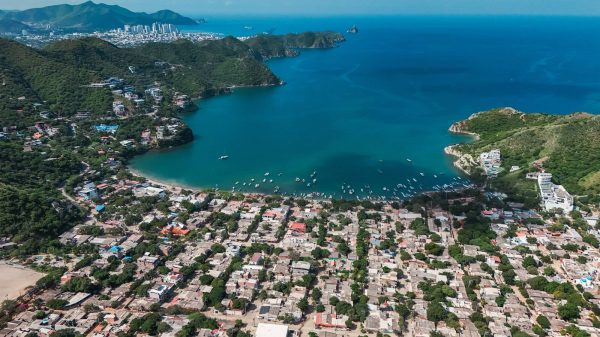
Cover photo: Felipe Restrepo Acosta, CC BY-SA 4.0, via Wikimedia Commons.